Crypto apps are now an important part of how people understand, manage and move digital assets. In the early days of crypto, users often depended on desktop wallets, browser tools, command-line interfaces or exchange websites. Today, the mobile app has become the most common entry point. A person may check a Bitcoin price, receive a stablecoin transfer, review a wallet balance, compare altcoins, set a security alert or read a transaction history directly from a phone. This convenience makes crypto more accessible, but it also makes app quality more important.
A crypto app should not be judged only by the number of coins it supports or the visual style of its dashboard. The real value of a crypto app comes from how clearly it helps a user understand what is happening. When users open an app, they need to know where their assets are displayed, how wallet balances are calculated, how deposits and withdrawals work, what security settings are active and what actions require careful review. A polished design is useful only when it supports clarity. If a screen looks modern but hides important details, the user experience can become risky.
What a Crypto App Usually Includes
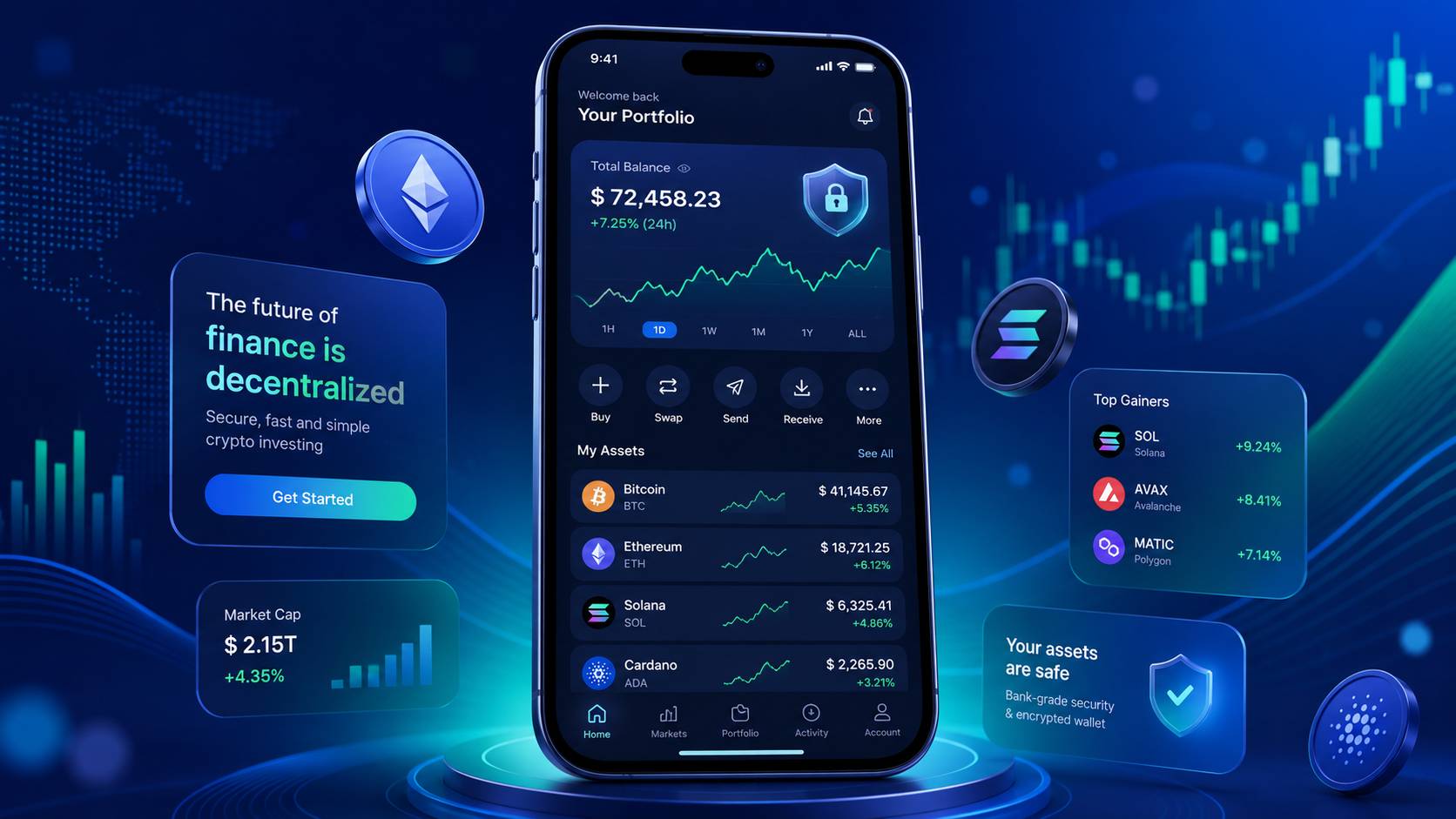
A typical crypto app may include several major areas. The wallet area shows balances, assets, transaction history, deposit addresses and withdrawal tools. The market area shows prices, watchlists, charts and asset information. The trading area may include buy and sell screens, order forms, trading pairs, order books or conversion tools. The payment area may include send, receive, scan, stablecoin transfers and account funding options. The security area may include passwords, two-factor authentication, biometric access, device management, withdrawal controls, account alerts and recovery information. A complete app may combine all of these sections, but the best experience depends on how well they are organized.
Many users begin with simple needs. They want to check prices, understand a balance and perhaps receive or send a small amount of crypto. As their confidence grows, they may explore watchlists, transaction records, wallet networks, swaps, portfolio summaries and trading tools. A good crypto app supports this learning path. It should not force a new user to face every advanced tool at once. It should also not hide important information from experienced users who need more control. The best app structure feels simple at the beginning and more powerful as the user learns where to look.
Why Mobile Design Matters
Mobile design is one of the most important parts of a crypto app because a small screen changes how users make decisions. On a desktop screen, a user may see charts, account details and multiple confirmation areas at the same time. On a phone, the app must decide what appears first, what is hidden behind a tab and what deserves a separate confirmation screen. These choices affect safety. A deposit screen that hides the network name can create confusion. A withdrawal screen that does not repeat the destination address can make mistakes easier. A trading screen that places action buttons too close to market noise can encourage rushed behavior.
Good mobile design uses spacing, typography and hierarchy to slow the user down at the right moments. A balance screen should be easy to read. A market screen should separate price data from trading actions. A send screen should display asset, network, address, amount and fee before confirmation. Security alerts should stand out from normal notifications. Buttons should be large enough for real mobile use, and labels should be clear enough that users do not need to guess. In crypto, a clear screen is not just a design preference. It can help prevent avoidable mistakes.
Wallet Features Inside Crypto Apps
Wallet features are central to most crypto apps. Some apps provide custodial wallets, where the platform manages custody and account recovery through its own systems. Other apps provide non-custodial wallets, where the user controls private keys or recovery phrases. Some apps combine both models in different sections. Users should understand which model they are using because the responsibility is different. A custodial account may feel easier to recover, but it depends on the platform. A non-custodial wallet may provide more direct control, but losing recovery information can create serious problems.
A strong crypto app should explain wallet responsibilities in plain language. If the user needs to protect a recovery phrase, the app should make that clear. If an asset is being sent on a specific network, the app should show the network clearly. If a memo, tag or destination detail is required, the app should warn the user before the transfer is made. Wallet design should reduce uncertainty. A user should not have to guess whether a transfer is on the correct chain or whether a deposit address is compatible with the sending platform.
Trading and Market Tools
Many crypto apps include trading and market tools. These tools may show charts, order books, watchlists, price alerts, market movers and trade history. For experienced users, this information can be helpful. For beginners, it can be overwhelming. A trading screen should help users understand the difference between observing a market and placing an order. Price movement, volume, percentage change and chart patterns can inform a decision, but they do not guarantee a result. The app should present trading tools as information tools, not as promises.
Clear order forms are especially important. A user should be able to see the asset, pair, order type, amount, estimated cost, fee and final confirmation before submitting a trade. If the app supports different order types, such as market, limit or stop orders, it should explain them clearly. If the app includes advanced trading, margin tools or derivatives, those areas should be separated from basic buying and selling. Combining advanced risk tools with beginner screens can create confusion. A strong app respects the different skill levels of its users.
Payments, Transfers and Stablecoins
Crypto apps are also used for payments and transfers. Some users rely on stablecoins for moving value between platforms. Others use crypto payment features to send assets to a wallet, receive funds from another user or scan a payment code. These actions may look simple on the surface, but each transfer can involve asset selection, network selection, address accuracy, transaction fees and confirmation timing. A good app should make all of these details visible before the user confirms the transfer.
Payment clarity is one of the strongest signs of a mature crypto app. The user should understand whether a transfer is pending, completed, failed or waiting for network confirmations. The transaction history should be easy to find. The app should show whether fees are charged by the network, the platform or both. If limits apply, the app should explain them. If an asset requires a special note, memo or tag, the app should make that requirement difficult to miss. Payment tools are useful only when users can trust the information shown on the screen.
Security Features Users Should Review
Security is one of the biggest reasons users compare crypto apps carefully. A crypto app may include strong login protection, biometric access, two-factor authentication, device verification, anti-phishing codes, withdrawal address controls and transaction alerts. However, security features must be understandable. If users do not know what a setting does, they may leave it disabled or use it incorrectly. A good app explains security choices in simple language and helps users build safer habits over time.
Users should also remember that app security depends partly on device security. A phone may contain email access, authenticator apps, screenshots, messaging apps and cloud backups. If the device is compromised, careless or shared, the crypto app becomes more vulnerable. Users should protect their phones with strong unlock methods, avoid unknown downloads, be cautious with public Wi-Fi, ignore fake support messages and keep app software updated. Security is not one button inside an app. It is a routine.
How to Compare Crypto Apps
When comparing crypto apps, users should avoid focusing on a single feature. A large asset list is useful, but it does not replace strong wallet safety. A beautiful interface is attractive, but it does not replace clear transaction review. Fast signup is convenient, but it does not replace account protection. Users should look at the full experience: onboarding, wallet design, market tools, payment clarity, security settings, support information, transaction history and mobile usability.
It can help to use a personal checklist. Does the app explain wallet recovery? Does it show the network before sending assets? Are fees visible before confirmation? Can the user find account security settings quickly? Are trading tools separated from basic wallet tools? Does the app provide useful records after an action is completed? Are alerts clear and meaningful? Does the app feel calm during important actions? These questions are more useful than choosing an app because it looks exciting or appears popular.
Responsible Use of Crypto Apps
Crypto apps make digital asset access easier, but they do not remove risk. Prices can change quickly. Transactions can be difficult to reverse. New assets can be hard to evaluate. Users can make mistakes when they act too quickly. A responsible app experience should help users pause, review and understand. It should not create pressure to trade, transfer or explore advanced tools without enough knowledge.
Responsible use also means understanding personal limits. Users should know why they are using an app, what actions they are comfortable with and what information they need before confirming anything important. A crypto app can provide tools, but the user still makes the decision. The most useful app is one that supports better decisions rather than faster reactions. This is why a careful reader should value clear design, practical education and reliable controls.
For readers who want a broader starting point, Best Crypto App explains how mobile crypto tools, wallets, payments, trading features and security habits fit together inside a complete app experience.