Bitcoin apps are often the first crypto apps many people explore because Bitcoin is the most recognized digital asset in the world. A Bitcoin app may look simple at first: a price screen, a wallet balance, a send button, a receive button and a chart. However, the real experience is deeper than that. A useful Bitcoin app helps users understand price movement, wallet safety, transaction confirmation, address accuracy, security settings and personal responsibility. It should make BTC easier to access without making important actions feel careless.
Bitcoin is different from a normal app balance or a points system. When users send BTC, the transaction interacts with a blockchain network. Once a transaction is confirmed, reversing it may not be possible. That means a Bitcoin app should make every transfer clear before the user confirms it. The app should display the destination address, amount, network fee and transaction status in a way that is easy to review. A strong Bitcoin app is not only fast. It is careful, readable and transparent.
What a Bitcoin App Usually Does
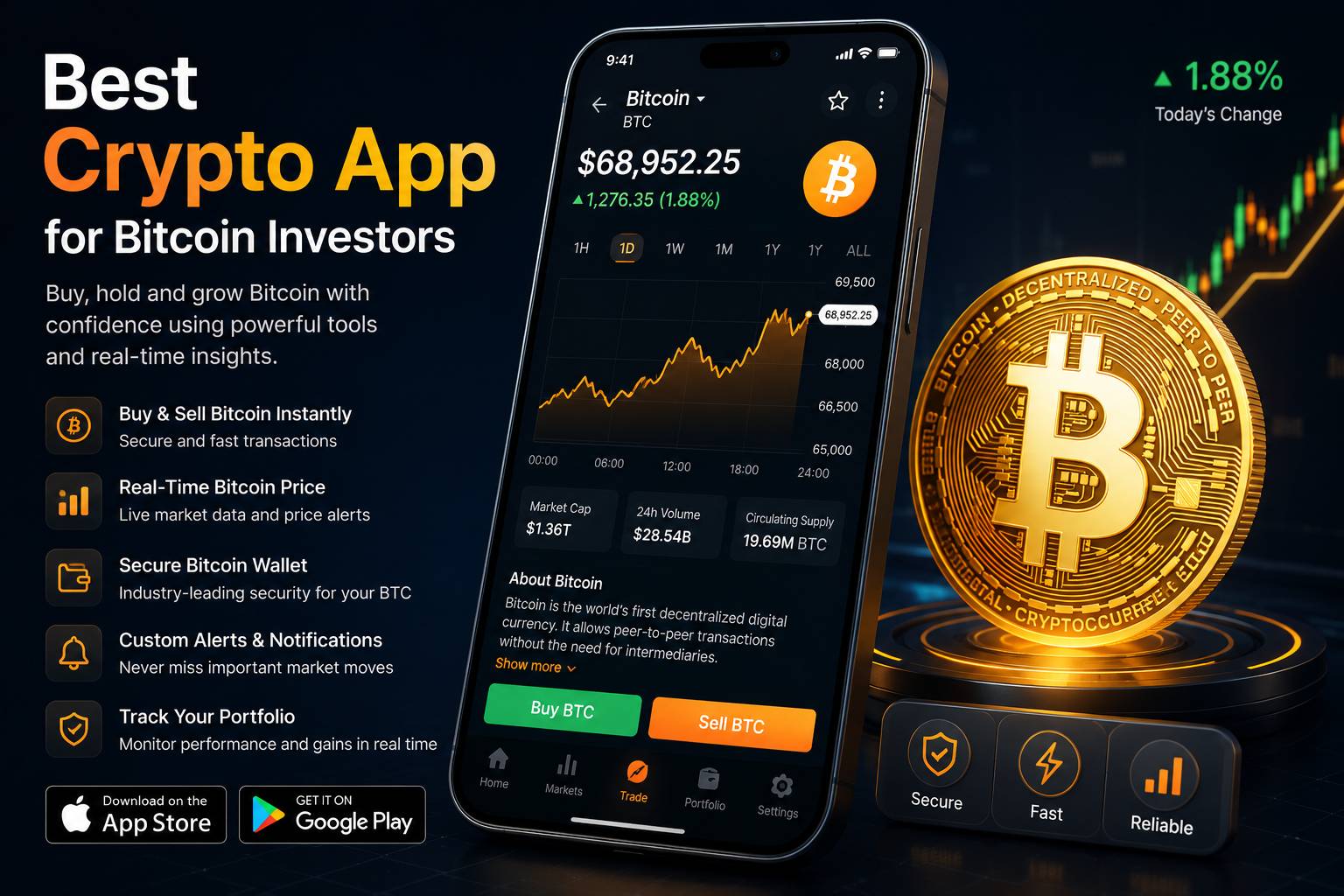
A Bitcoin app usually combines several functions. It may show the current BTC price, market charts, daily movement, watchlist data, wallet balance, transaction history, sending tools, receiving tools and account protection settings. Some Bitcoin apps are focused only on BTC. Others are part of larger crypto platforms that also support Ethereum, stablecoins and altcoins. The right choice depends on what the user needs. A person who only wants BTC storage may prefer a simpler wallet-style app. A person who tracks multiple markets may prefer an app with broader portfolio tools.
The strongest Bitcoin app experience keeps the main actions easy to understand. Users should know where to check their BTC balance, where to view the BTC price, where to find transaction history and where to review security settings. If the app includes trading functions, those functions should be separated from wallet controls. A user should not confuse watching the Bitcoin price with placing a trade. Clear navigation helps users avoid rushed or accidental actions.
Bitcoin Price Tracking
Price tracking is one of the most common reasons people open a Bitcoin app. Users want to know whether BTC is moving up or down, how it performed during the day and how the current price compares with previous periods. A good app should show price data clearly, including the timeframe used for percentage changes. A one-hour move, a one-day move and a one-year move can tell very different stories. If an app shows only a large green or red number without context, users may react emotionally instead of thinking carefully.
Charts can also be useful, but they should not overwhelm the user. A beginner may prefer a simple line chart with common timeframes. A more experienced user may want candlestick charts, volume data and indicators. A good Bitcoin app should make both views possible without forcing complexity on every user. The chart should help the user understand movement, not push the user into a fast decision.
Bitcoin Wallet Features
Wallet features are central to any Bitcoin app. A wallet area should show BTC balance, receiving address, sending tools, transaction history and security information. Users should understand whether the app uses a custodial wallet, a non-custodial wallet or a combined model. In a custodial app, account access and recovery may depend on the platform. In a non-custodial wallet, the user may be responsible for recovery phrases or private keys. This difference is extremely important because it changes who controls access.
A Bitcoin wallet should make receiving BTC simple but not careless. The receive screen should display a clear address and QR code. It should warn users to copy the address accurately and confirm that the sender is using the correct asset. The send screen should be even more careful. Before BTC is sent, the app should repeat the destination address, amount and network fee. It should give users enough time to review the details.
Bitcoin Transaction Fees
Bitcoin transactions often include network fees. These fees can change depending on network activity. A good Bitcoin app should explain that the fee is connected to network conditions and transaction processing. Users should be able to see the fee before they confirm a transaction. If the app allows users to choose between different fee levels, it should explain the tradeoff between cost and confirmation speed.
Fee clarity is especially important for smaller transactions. A fee that looks minor on a large transfer may be significant on a small transfer. Users should understand the total amount being sent and the fee being paid. A mature app should not hide fee information behind vague language. Clear fees help users plan better and avoid surprise.
Security in Bitcoin Apps
Security is one of the most important parts of a Bitcoin app. Users should review login protection, two-factor authentication, biometric access, device management, withdrawal controls and account alerts. If the app supports address whitelisting or withdrawal delays, users should understand how these features work. Security tools are useful only when they are enabled and understood.
Users also need to protect the device itself. A phone may contain email accounts, authentication apps, screenshots, cloud backups and personal messages. If the phone is compromised, the Bitcoin app may become vulnerable. Users should avoid unknown downloads, protect their email accounts, use strong device unlock methods and be careful with public Wi-Fi. A Bitcoin app can provide protection, but personal habits still matter.
Bitcoin-Only Apps and Multi-Asset Apps
Some users prefer Bitcoin-only apps because they want a focused experience. A Bitcoin-only app may reduce distractions and make BTC-specific features easier to understand. It may focus on storage, transfers, price tracking and Bitcoin education. For users who do not need altcoins, this simplicity can be valuable.
Other users prefer multi-asset apps that include Bitcoin alongside Ethereum, stablecoins and other digital assets. This can be useful for portfolio management, but it also adds complexity. The app must separate assets clearly, show different networks correctly and prevent users from confusing one transfer type with another. A multi-asset app can be powerful, but it needs strong organization.
Using Bitcoin Apps Responsibly
Bitcoin apps make BTC easier to access, but easy access should not remove caution. Users should understand that Bitcoin prices can move quickly. They should avoid making decisions only because a notification appears or a chart changes color. They should review transaction details carefully, protect recovery information and understand the difference between holding, sending and trading.
A responsible Bitcoin app experience helps users move slowly when the action is important. It should not hide risk behind smooth animations or large buttons. It should help users build better habits: checking addresses, reviewing fees, protecting devices, reading transaction history and learning before using advanced features. A good app gives users control, but control works best with knowledge.
Final Thoughts on Bitcoin Apps
A Bitcoin app should be judged by how well it supports real user needs. Does it show BTC balances clearly? Does it explain sending and receiving? Does it display fees before confirmation? Does it protect account access? Does it provide readable transaction history? Does it help beginners learn without overwhelming them? These questions matter more than visual style alone.
The best Bitcoin app experience is calm, clear and protective. It gives users access to BTC while reminding them that digital asset actions deserve attention. For a broader explanation of wallets, trading tools, payments and mobile crypto habits, visit Best Crypto App.