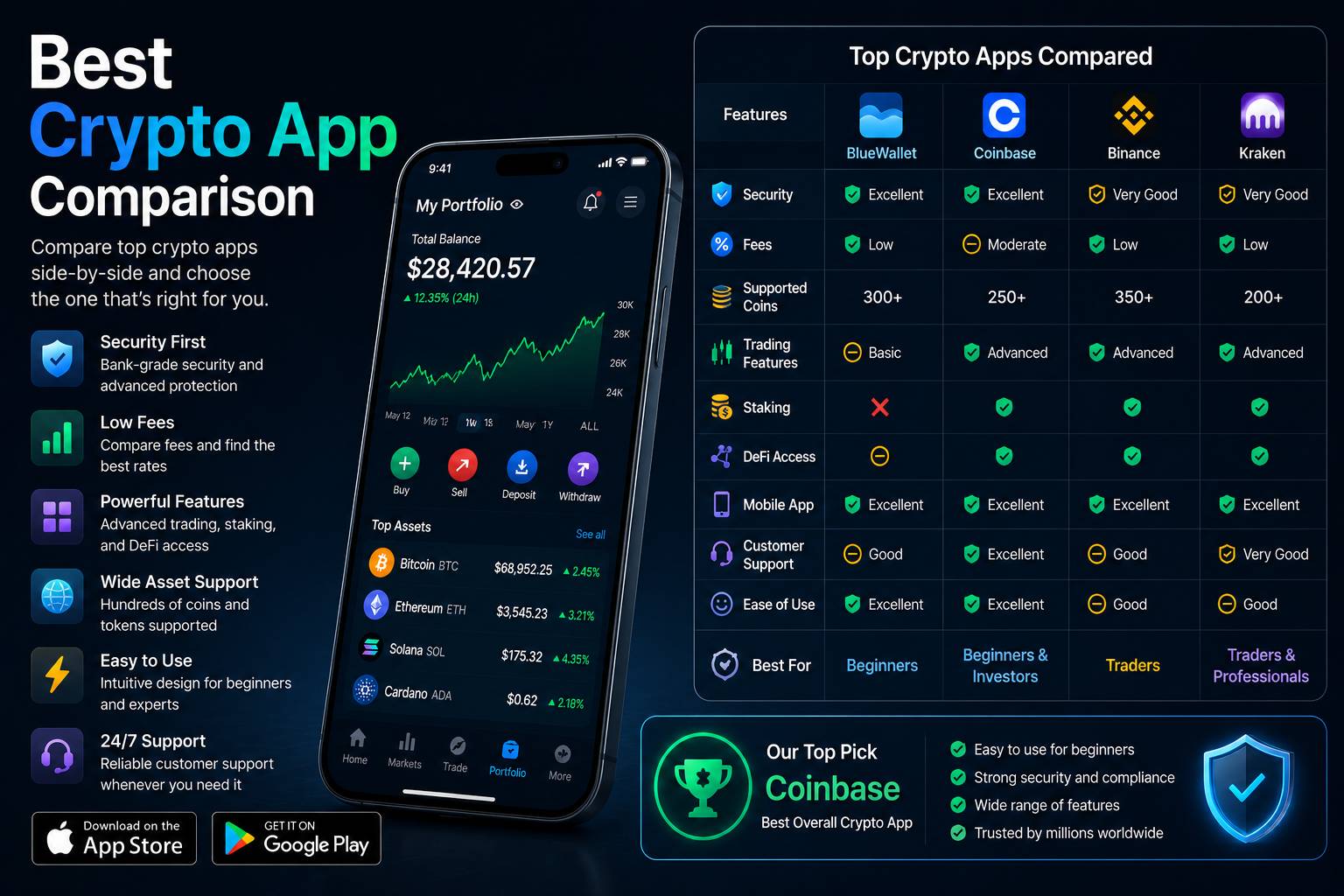
A crypto app comparison should not begin with the question of which app looks the most exciting. It should begin with the question of what the user actually needs. Some users want a simple wallet. Some want Bitcoin access. Some want stablecoin payments. Some want trading tools and market charts. Some want strong security settings and clear transaction history. A useful comparison helps readers separate marketing appeal from practical app quality.
Crypto apps can look similar at first glance. Many show balances, charts, coin lists, send buttons, receive buttons and account tabs. The difference appears when users examine the details. Does the app explain wallet recovery clearly? Does it show the selected network before a transfer? Are fees visible before confirmation? Are security settings easy to find? Are trading tools organized in a way that beginners can understand? These questions reveal more than a simple screenshot.
Start With the User’s Main Purpose
The best comparison begins with purpose. A user who only wants to hold BTC does not need the same app as a user who actively compares altcoin markets. A person who sends stablecoins regularly may care more about payment clarity than advanced charting. A beginner may prefer simple explanations, while an experienced user may need deeper records and more control. Without a clear purpose, app comparison becomes confusing.
Readers should list their most important needs before comparing apps. These needs may include wallet access, price tracking, trading, portfolio monitoring, payments, stablecoin transfers, account security, recovery control, asset variety or educational guidance. Once the purpose is clear, it becomes easier to judge whether an app is useful or merely attractive.
Wallet Comparison
Wallet features are one of the most important comparison areas. A strong wallet experience should show balances clearly, explain custody, display receiving addresses, support careful sending, provide readable transaction history and help users understand recovery responsibilities. A wallet should not make users guess whether they are using a custodial or non-custodial model.
When comparing wallet tools, readers should review how the app handles asset lists, network labels, deposit screens, withdrawal screens, memo or tag requirements, transaction status and recovery warnings. Multi-asset wallets should organize different assets clearly. Bitcoin-focused wallets should make BTC transfers, confirmations and fees easy to understand.
Trading App Comparison
Trading features should be compared carefully because they can influence fast decisions. A trading app may include market charts, watchlists, order books, order forms, price alerts, gainers and losers, portfolio tools and trading history. These features are useful only when they are clear. A complex interface without explanation can create confusion.
A good comparison should look at how the app separates market viewing from order placement. It should check whether order types are explained, whether fees are visible, whether confirmation screens repeat important details and whether advanced tools are clearly separated from beginner actions. The goal is not simply to find the app with the most trading features. The goal is to find an app that makes trading information understandable.
Security Comparison
Security should be central to every crypto app comparison. Readers should check whether the app supports strong authentication, biometric login, device management, withdrawal controls, address whitelisting, anti-phishing features and account alerts. These features should be easy to locate and understand. A security setting hidden behind confusing menus may not help many users.
Security comparison should also consider user education. Does the app explain recovery phrase safety? Does it warn users before sensitive actions? Does it make suspicious login alerts visible? Does it distinguish security alerts from normal promotional messages? A strong security experience helps users build safer habits over time.
Payment and Transfer Comparison
Payment tools should be compared by clarity, not only speed. A crypto payment feature may involve asset choice, network choice, destination address, transfer amount, fees, limits and confirmation status. The app should show these details before the user confirms a transfer. Fast payments are useful, but fast mistakes can be costly.
Stablecoin support is another important area. Some users rely on stablecoins for transfers because they want reduced price movement during payment. However, stablecoins still require network awareness and transaction review. A good app should show which stablecoin is being used, which network is selected and what fees or limits may apply.
Mobile Design Comparison
Mobile design affects the entire app experience. A crypto app may be used while traveling, commuting, multitasking or responding to alerts. The screen must remain clear in real use. Text should be readable. Buttons should be placed carefully. Critical details should not be hidden. Confirmation screens should be calm and obvious.
A strong mobile design does not only look modern. It helps users understand where they are, what they are viewing and what action they are about to take. Good design separates wallet areas, market areas, trading areas, payment areas and security areas. It reduces accidental taps and makes important review steps easier.
Comparison Table
| Comparison Area | What to Check | Why It Matters |
|---|---|---|
| Wallet | Custody model, recovery, addresses, networks and transaction history. | Wallet clarity helps users avoid access problems and transfer mistakes. |
| Trading | Charts, watchlists, order types, fees, confirmations and trade records. | Trading tools should support careful decisions, not rushed actions. |
| Payments | Deposit methods, withdrawal routes, stablecoins, limits and status updates. | Payment clarity helps users understand how value moves through the app. |
| Security | Authentication, device management, withdrawal controls and alerts. | Strong security settings help protect account access and sensitive actions. |
| Mobile Design | Readability, navigation, spacing, labels and confirmation screens. | Most users manage crypto from small screens where clarity is essential. |
| Support Information | Help pages, explanations, risk notices and account guidance. | Users need reliable information when they are unsure about app features. |
Common Comparison Mistakes
One common mistake is choosing an app only because it supports many assets. A large asset list can be useful, but it does not guarantee good wallet safety, clear fees or strong account protection. Another mistake is choosing an app only because it looks modern. Design matters, but visual polish should support clarity rather than replace it.
Users also sometimes compare apps based only on trading tools. Advanced charts and order types may be valuable, but they are not useful if the user does not understand them. Beginners should be especially careful with advanced features. A responsible app should make it clear which tools are simple and which tools require more knowledge.
A Practical App Comparison Checklist
Before relying on any crypto app, readers can ask a simple set of questions. Does the app explain the wallet model? Are recovery responsibilities clear? Can the user review transaction details before sending assets? Are networks and fees visible? Are security settings easy to find? Are trading tools separated from wallet tools? Is transaction history easy to review? Are alerts meaningful? Does the app help the user slow down during important actions?
The answers to these questions can reveal whether an app is built for real use. The best app comparison is not about finding the loudest marketing claim. It is about finding the clearest, safest and most practical user experience for a specific purpose.
Final Thoughts
Comparing crypto apps takes patience. The strongest app for one user may not be the strongest app for another. Wallet users, Bitcoin users, payment users, trading users and security-focused users may all value different features. A good comparison respects those differences and helps readers build their own standard.
For the complete overview of how wallets, trading tools, payment features and security habits fit together, visit Best Crypto App.